
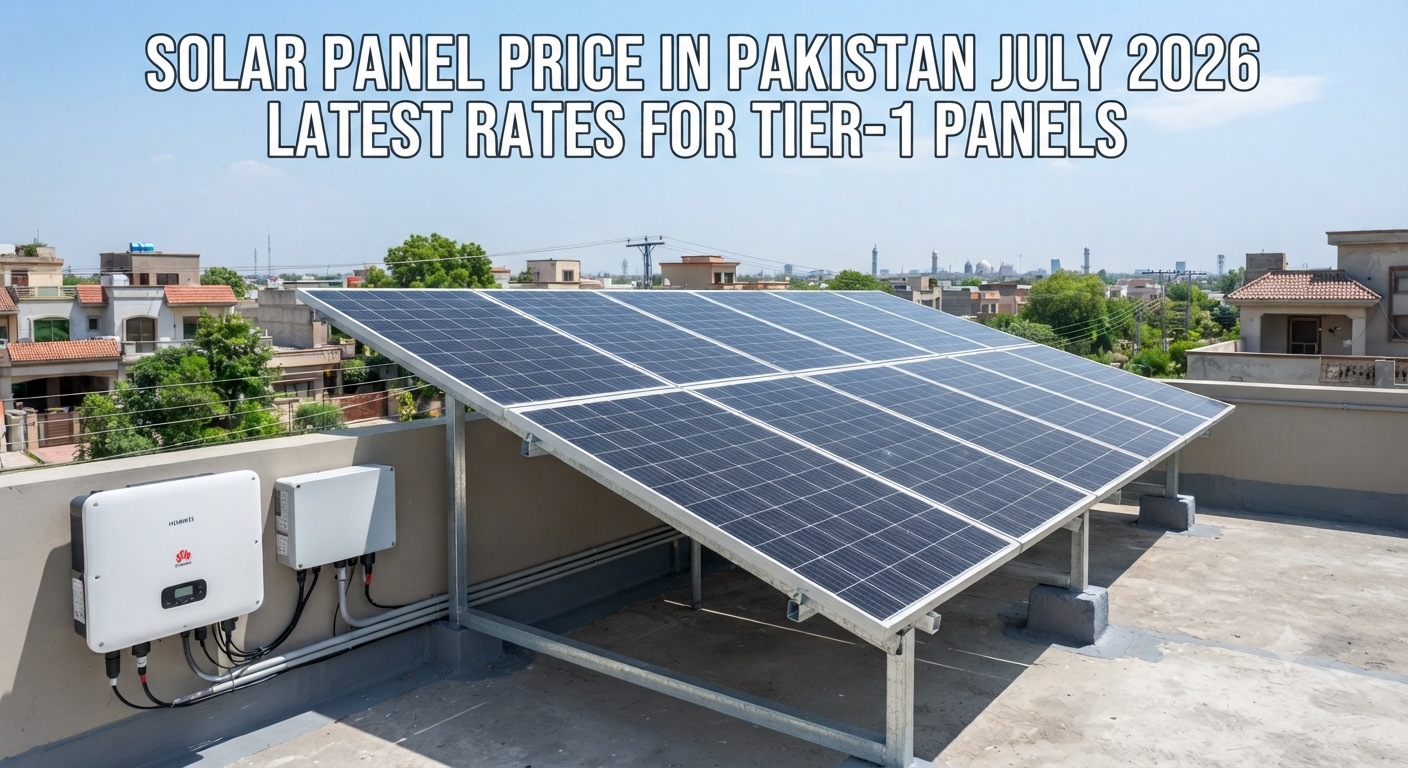
Solar Panel Price in Pakistan
Latest solar panel prices in Pakistan (July 2026): Get the best rates for Tier-1 panels and learn how to optimize your system for the new net billing policy. If you’ve been tracking the solar market in Pakistan lately, you know the landscape has shifted. The days of “set it and forget it” net metering are evolving into a more strategic game of self-consumption, but one thing remains constant: solar is still the most effective shield against skyrocketing electricity bills. As of July 2026, the market has stabilized after a period of intense volatility. If you are planning to install a system this month, understanding the current per-watt rates for Tier-1 panels is the first step toward a smart investment.
Also read: Kya Sirf New SIM Par Paisay Aa Rahay Hain? BISP Payment ki Haqeeqat aur Mukammal Tafseel
Current Market Rates: What You’ll Pay for Tier-1 Panels
Solar panel pricing in Pakistan is largely dictated by the global silicon market and the strength of the Rupee. As of mid-July 2026, the market for Tier-1 panels is showing a consistent trend, with prices hovering between Rs. 38 and Rs. 47 per watt, depending on the brand and specific technology (N-type TOPCon, HJT, or HPBC).
Why Do Panel Prices Fluctuate?
You might notice that quotes vary between dealers. This isn’t necessarily price gouging; it’s usually due to:
- Currency Instability: Because these panels are imported, every shift in the USD/PKR exchange rate is reflected in landed costs almost immediately.
- Inventory Cycles: When large shipments arrive at the port, supply increases and prices dip slightly. Conversely, delays in customs clearance can lead to localized “stock-out” spikes.
- Technological Shifts: N-type TOPCon panels have become the new industry standard. Older PERC technology is seeing price cuts as demand shifts toward higher-efficiency modules.
How Much Should You Budget for a Complete System?
Remember, panels are only about 35-45% of your total setup cost. When getting a quote, don’t just look at the panel price—look at the “Total System Cost.”
| System Size | Estimated Price Range (On-Grid) |
| 5 kW | Rs. 5.5 – 7 Lakh |
| 10 kW | Rs. 10 – 13 Lakh |
| 15 kW | Rs. 14.5 – 18 Lakh |
Note: These are indicative figures for Tier-1 equipment including inverters, mounting structures, and professional installation. Hybrid systems with battery storage will significantly increase the budget.
Understanding the New “Net Billing” Reality
The biggest conversation in the solar community this year is the transition from traditional Net Metering to Net Billing.
Is solar still worth it in Pakistan in 2026?
Yes, but the strategy has changed. Under the old net metering system, you were credited at the same high retail rate you paid for electricity. Under the new net billing framework, surplus electricity exported to the grid is compensated at a wholesale rate—typically Rs. 11–13 per unit.
This means that “oversizing” your system just to earn credit is no longer the smartest play. Instead, aim to size your system to match your daytime consumption. If you run your ACs, water pumps, and laundry during peak sunlight hours, you are consuming your own “free” electricity rather than buying it from the grid at Rs. 50+ per unit.
Top-Tier Solar Panel Brands in Pakistan (2026)
Choosing a brand is about more than just the logo on the front. You want Tier-1 manufacturers—companies with proven, massive production capacity and reliable long-term warranties.
Which brands currently dominate the market?
- LONGi Solar: Widely considered the efficiency king, especially their Hi-MO X series. They perform exceptionally well in Pakistan’s high-heat, dusty environment.
- Jinko Solar: Their Tiger Neo N-type series is a favorite among installers for its durability and consistent degradation rates.
- Canadian Solar: A solid, reliable choice for those who want a “set it and forget it” system. They are often the go-to for larger commercial or industrial setups.
- Trina & JA Solar: These offer a fantastic balance between cost and performance. If you are on a strict budget but don’t want to compromise on quality, these are your best bets.
How to Avoid Common Pitfalls During Installation
I have seen far too many homeowners get caught up in the “cheapest quote” trap, only to face performance issues six months later.
What should you check before signing a contract?
- Avoid “Mixed” Shipments: Ensure your panels are all from the same batch. Different serial numbers or slight variations in voltage can create mismatched strings, dragging down the performance of your entire array.
- Focus on the Inverter: Your inverter is the “brain” of your system. Even the best panels will fail if paired with a low-quality, incompatible inverter.
- Warranty Documentation: Ask for the original warranty certificate from the manufacturer. Ensure your installer is authorized to register those warranties in your name.
- DC/AC Protection: Never skip on the safety components. Quality DC breakers, SPDs (Surge Protection Devices), and proper grounding are what prevent fires and equipment damage during lightning storms or power surges.
Frequently Asked Questions (FAQ)
1. Should I wait for solar prices to drop further?
Generally, no. Solar prices in Pakistan are more sensitive to currency fluctuations than global manufacturing trends. The money you lose in electricity bills by waiting 3-4 months often outweighs any potential savings from a minor price drop.
2. What is the difference between PERC and N-type panels?
N-type (TOPCon) panels are more efficient, produce more power in low-light conditions, and degrade slower than older PERC panels. They are the standard for any 2026 installation.
3. Will the fixed charges on my bill kill my solar savings?
The new fixed charges based on sanctioned load do impact the ROI, but solar remains highly profitable. The key is to maximize self-consumption during the day to avoid importing from the grid during peak tariff hours.
4. How long does a solar system typically take to pay for itself?
With current electricity tariffs, a well-sized residential system typically hits its break-even point in 4 to 6 years.
5. Are hybrid systems better than on-grid systems?
Hybrid systems are necessary if you face frequent load shedding and need backup power. However, for pure financial returns (ROI), on-grid systems are still the most cost-effective.
6. Does brand really matter? Yes. Tier-1 brands have better manufacturing quality controls. In a climate as harsh as Pakistan’s, you need panels that can withstand extreme heat and dust without cracking or losing efficiency prematurely.