Eid in Pakistan
Imagine the chaotic roar of a Pakistani metropolis suddenly giving way to the serene, rhythmic echoes of the Takbeerat at dawn. The air smells of cardamom, roasting meat, and fresh henna. If you have never experienced Eid in Pakistan, you are missing out on one of the world’s most intense, beautiful, and sensory-rich cultural spectacles. It is a time when the entire nation pivots from the grueling routine of daily life to a state of collective joy, deep spirituality, and unparalleled hospitality.
Also read: BISP 14,500 New Payment Online Check 2026 – Easy & Fast 8171 Verification Guide
The Dual Joy: Understanding Eid ul Fitr and Eid ul Adha
Pakistan celebrates two distinct Eids every year, each dictated by the lunar Islamic calendar. While both festivals share the core values of family and charity, their vibes, preparations, and culinary focal points are entirely different.
+——————+———————————-+———————————–+
| Feature | Eid ul Fitr | Eid ul Adha |
+——————+———————————-+———————————–+
| Alternative Name | “Meethi Eid” (Sweet Eid) | “Bari Eid” (Big / Meat Eid) |
| Primary Focus | Celebrating the end of Ramadan | Honoring Prophet Ibrahim’s sacrifice|
| Key Food | Sheer Khurma, Vermicelli | Mutton/Beef Tikka, Karahi, Biryani|
| Major Ritual | Giving Fitrana (charity) | Qurbani (animal sacrifice) |
+——————+———————————-+———————————–+
Eid ul Fitr: The Sweet Reward of Ramadan
Commonly known as Meethi Eid (Sweet Eid), this festival marks the end of the holy month of fasting. After 30 days of spiritual reflection and abstinence, the country explodes into a celebration centered on sweets, new clothes, and family reunions. The focus here is on shedding the austerity of Ramadan and embracing a mood of gratitude and indulgence.
Eid ul Adha: The Festival of Sacrifice
Affectionately dubbed Bari Eid (Big Eid), this commemoration happens during the Islamic month of Dhu al-Hijjah. It honors the willingness of Prophet Ibrahim (Abraham) to sacrifice his son as an act of obedience to God. The defining feature of this Eid is the Qurbani—the ritual sacrifice of goats, sheep, cows, or camels. The meat is then meticulously divided into three parts: one for the poor, one for relatives, and one for home consumption.
How is Eid date decided in Pakistan?
The dates for both Eids depend entirely on the sighting of the crescent moon. In Pakistan, this responsibility falls on the Central Ruet-e-Hilal Committee, a body of religious scholars and scientific experts. They gather on the 29th night of the lunar month, using high-tech telescopes alongside traditional testimonies.
Because moon sighting relies on atmospheric clarity, the entire nation sits glued to their television screens or refreshes Twitter feeds late into the night, waiting for the official announcement. It is a moment of collective suspense that you rarely see anywhere else in the world.
Chand Raat: The Electric Night Before Eid
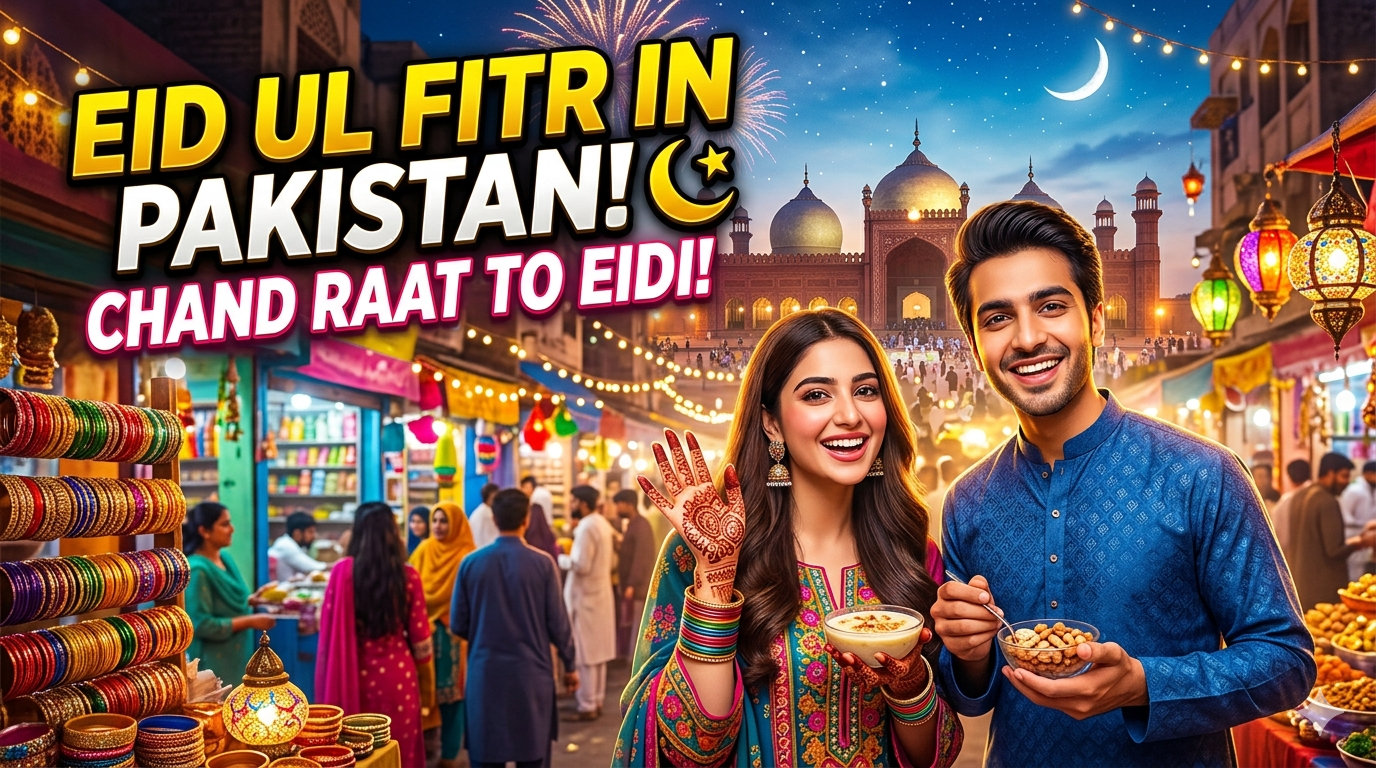
If Eid is the main event, Chand Raat (Night of the Moon) is the ultimate pre-game. The moment the Ruet-e-Hilal Committee announces the moon sighting, an electric current surges through every street in Pakistan. Nobody sleeps.
The Midnight Rush in Local Bazaars
Bazaars from Karachi’s Tariq Road to Lahore’s Anarkali turn into seas of humanity. Shopkeepers stay open until the morning call to prayer. Women flock to stalls to buy colorful glass bangles (chooriyan) that match their festive outfits. Tailors work frantic, 24-hour shifts, fueled by endless cups of chai, trying to finish the last few alterations on traditional Shalwar Kameez suits.
The Art of Henna and Glass Bangles
No Chand Raat is complete without the sensory overload of Mehendi (henna) stalls. Girls and women line up at makeshift tables on sidewalks, where local artists apply intricate, lace-like geometric and floral patterns to their palms. The sharp, earthy scent of wet henna mixes with the metallic chime of thousands of glass bangles being tried on, creating an unforgettable sensory experience.
What do people do on Chand Raat in Pakistan?
Aside from shopping, Chand Raat is a massive social event. Young people crowd onto motorbikes and drive through illuminated streets, blaring festive music. Families hit local dhabas for midnight snacks, while others stay home to prep the kitchen for the next morning’s massive feast. It is a beautiful chaos that sets the emotional stage for the holy day ahead.
Morning Rituals: Outfits, Prayers, and Eidi
The transition from the chaos of Chand Raat to the serene dignity of Eid morning is jarringly beautiful. The day begins early, bathed in a sense of spiritual purity.
Traditional Attire: The Elegance of Shalwar Kameez
On Eid morning, the entire population gets a wardrobe upgrade. Everyone—regardless of age or economic status—wears their finest clothes. For men, this almost universally means a crisp, well-pressed Shalwar Kameez, often paired with a traditional waistcoat and Peshawari Chappals. Women wear heavily embroidered, vibrant suits, complemented by the bangles and henna from the night before.
“Wearing new clothes on Eid isn’t just about vanity; it’s an act of sunnah (prophetic tradition) that symbolizes spiritual renewal and self-respect.”
— Allama Iqbal Open University Cultural Studies Journal
The Congregation: Eid Namaz at the Eidgah
By 7:00 AM, the streets fill with men and children walking toward local mosques or massive open-air grounds called Eidgahs. The atmosphere is heavy with the scent of Oudh and Itar (traditional perfumes).
The Eid prayer is short but incredibly powerful. When the prayer ends, the true magic happens: the traditional three-way embrace. Total strangers turn to each other, hug three times, and say “Eid Mubarak.” In that single moment, social classes, political divides, and personal grievances melt away.
The Magic of Eidi: A Tradition of Giving
For Pakistani children, Eid is essentially the ultimate payday. Once the adults return from the mosque, younger family members line up to pay respects to their elders through a respectful greeting called Salam. In return, the elders hand out Eidi—crisp, fresh banknotes.
The State Bank of Pakistan actually issues billions of rupees in brand-new, uncirculated currency notes to commercial banks right before Eid just to satisfy this tradition.
Culinary Heritage: The Flavor Profile of Pakistani Eid
You cannot talk about Eid in Pakistan without talking about food. The country’s culinary landscape during these holidays is a glorious, unashamed celebration of spice, sugar, and meat.
Sheer Khurma: The Ultimate Sweet Start
On Eid ul Fitr, the very first thing a Pakistani eats after returning from prayers is Sheer Khurma. This legendary dessert is a rich, creamy pudding made by simmering vermicelli in whole milk, infused with saffron, cardamom, and a heavy handful of dates, pistachios, and almonds. Every household has its own secret family recipe passed down through generations.
The Carnivore’s Dream: Eid ul Adha Feasts
If Eid ul Fitr belongs to sugar, Eid ul Adha is undisputed kingdom of meat. Once the ritual sacrifices are completed, kitchens across Pakistan transform into high-gear smokehouses.
The first day usually features Kaleeji (fried liver) for breakfast. By afternoon, the air smells of charcoal as families set up grills on rooftops and balconies to make mutton tikkas, succulent seekh kebabs, rich beef karahis, and aromatic biryanis.
Popular Pakistani Eid Foods
- Sheer Khurma: Milk, dates, and vermicelli dessert.
- Sawaiyan: Dry or milk-based sweet vermicelli.
- Kaleeji Fry: Spiced, pan-fried liver eaten immediately after sacrifice.
- Namkeen Gosht: A tender, slow-cooked meat dish native to Peshawar, seasoned primarily with salt and fat.
- Biryani: The undisputed king of festive rice dishes, layered with heavily spiced meat.
The Economics of Eid: Philanthropy and Holidays
Beyond the spiritual and social aspects, Eid is a massive economic engine that drives the Pakistani market and highlights the country’s deep-rooted philanthropic culture.
How many days of holidays are there for Eid in Pakistan?
The federal government typically announces a 3 to 5-day official holiday window for both Eids. However, because Pakistanis love to maximize family time, the country practically slows down for an entire week. Schools, universities, banks, and government offices close completely, allowing millions of internal migrants to travel back to their ancestral villages from major hubs like Karachi, Lahore, and Islamabad.
+————————+—————————————+
| Economic Sector | Impact and Activity During Eid |
+————————+—————————————+
| Transport & Logistics | Massive surge in train/bus bookings |
| Livestock Trade | Multi-billion rupee Bakra Mandi trade |
| Textiles & Fashion | Highest retail sales quarter of year |
| Charity & Philanthropy | Peak distribution of Zakat/Fitrana |
+————————+—————————————+
The Phenomenon of Bakra Mandi (Livestock Markets)
Weeks before Eid ul Adha, massive, sprawling livestock markets (Bakra Mandis) pop up on the outskirts of every major city. Farmers bring millions of beautifully groomed cows, goats, sheep, and camels from rural areas.
Buying an animal is an art form here. It involves hours of intense bargaining, checking the animal’s teeth to verify age, and ensuring it is healthy. Some premium animals—often named things like “Sultan” or “Shera”—gain local celebrity status for their immense size and beautiful markings, selling for millions of rupees.
Philanthropy and the Safety Net
Pakistan is globally recognized as one of the most charitable nations on earth. According to data compiled by the Pakistan Centre for Philanthropy (PCP), the country donates more than 1% of its GDP to charity.
During Eid ul Fitr, every Muslim who can afford it must pay Fitrana (a mandatory charitable donation) before the Eid prayer, ensuring that the underprivileged can also buy new clothes and food. During Eid ul Adha, the distribution of sacrificial meat acts as a critical nutritional safety net, providing high-quality protein to millions of impoverished families who cannot afford meat during the rest of the year.
Frequently Asked Questions (FAQ)
What is the difference between the two Eids celebrated in Pakistan?
Eid ul Fitr occurs after Ramadan and focuses on celebrating the completion of fasting with sweets and family gatherings. Eid ul Adha happens later in the year, honoring the prophet Ibrahim’s sacrifice through the ritual slaughter of animals and distribution of meat.
Why do Pakistanis wear new clothes on Eid?
Wearing new or your cleanest clothes on Eid is a highly encouraged prophetic tradition (Sunnah). It reflects a state of spiritual cleanliness, gratitude to God, and respect for the community during congregational prayers.
Can non-Muslims participate in Eid celebrations in Pakistan?
Absolutely. Eid in Pakistan is a cultural phenomenon as much as a religious one. Non-Muslim minorities often visit their Muslim friends, exchange sweets, and attend Chand Raat festivities. It is a time of open houses and shared hospitality.
What is Eidi and who gives it?
Eidi is a traditional monetary gift given during Eid, primarily to children and younger relatives by parents, grandparents, and elder family members. It is given after the morning Eid prayers as a gesture of love and celebration.
How is sacrificial meat distributed during Eid ul Adha?
The meat from the sacrificed animal is traditionally split into three equal parts. One-third is kept for the immediate family, one-third is distributed to extended relatives and neighbors, and the remaining one-third is given to the poor and needy.
Final Thoughts on the Festive Spirit
At its core, Eid in Pakistan is a beautiful masterclass in resilience and community. No matter what economic challenges or political storms the country might be facing, the arrival of Eid brings a collective pause. It is a time when doors are unlocked, dining tables are extended, and the scent of sweet cardamom or smoky grills fills the air. It reminds everyone that joy is sweeter when shared, and that tradition, family, and charity are the true pillars that hold a society together.