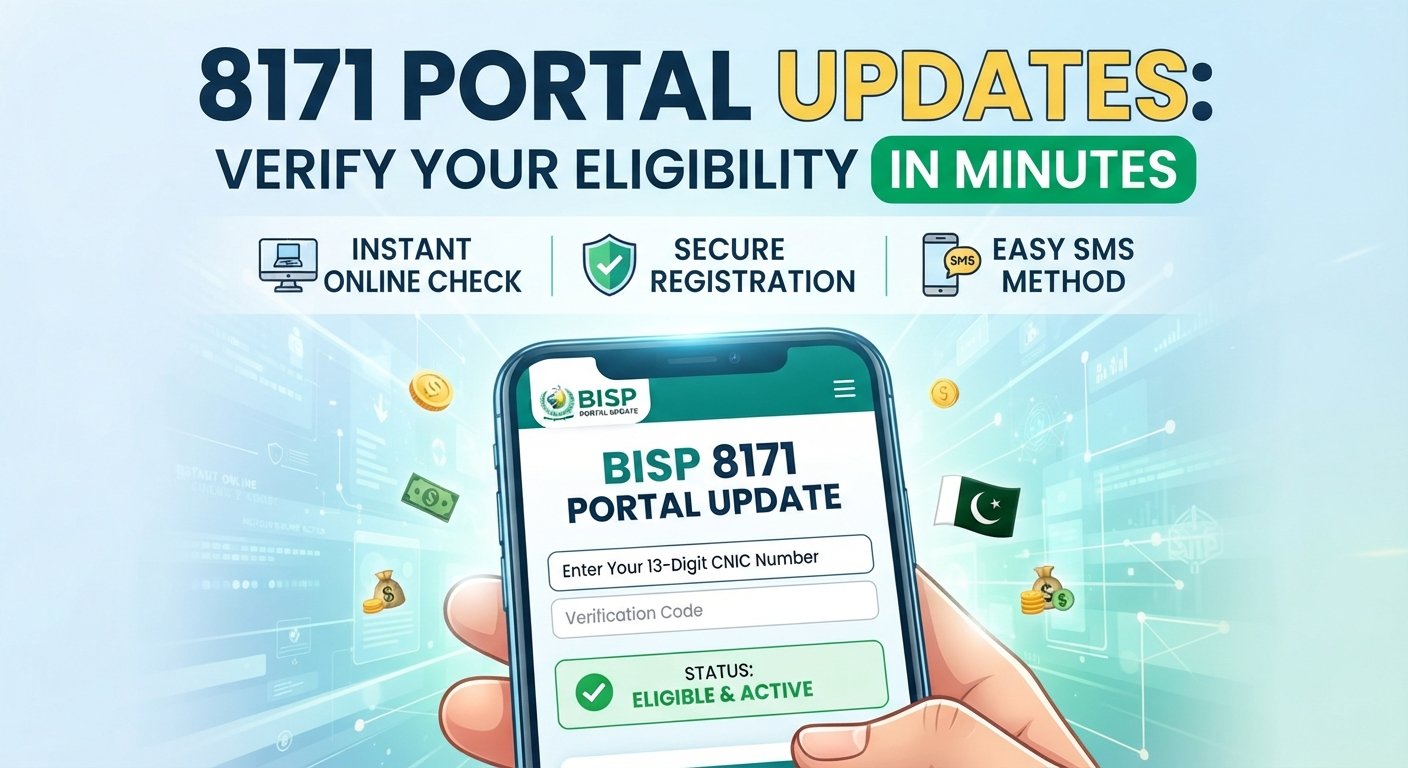
8171 Portal Updates
Check your BISP status quickly using the official 8171 portal updates guide. Learn step-by-step verification, SMS methods, and error troubleshooting. Standing in line at a local utility office just to find out if your financial assistance application went through is a frustrating waste of time. Millions of families across Pakistan rely on social safety nets like the Benazir Income Support Programme (BISP) to manage rising inflation, yet navigating the paperwork often feels like solving a maze blindfolded. The good news is that the digital shift has changed everything. By leveraging the updated 8171 web portal and SMS gateway, checking your status no longer requires standing in long queues or paying middlemen.
Also read: How to Check BISP Balance Online through 8171 Web Portal
Understanding the 8171 Portal Infrastructure
The Benazir Income Support Programme has steadily modernized its backend architecture to handle millions of simultaneous lookup requests without crashing. Understanding how this system works gives you a distinct advantage when checking or updating your records.
How the National Socio-Economic Registry Powers 8171
At the heart of the 8171 service lies the National Socio-Economic Registry (NSER). This database compiles household surveys, income metrics, and family composition data collected from door-to-door enumerators nationwide. When you enter your Computerized National Identity Card (CNIC) number into the portal, the system cross-references your details against this live registry in seconds.
Why Database Synchronization Matters for Applicants
Many people panic when a portal check returns a “pending” or “under review” status. In reality, data synchronization happens in batches. If your household survey was recently updated at a local tehsil office, it can take up to a week for the central server to reflect those changes. Knowing this prevents unnecessary repeat visits and helps you time your checks effectively.
Security Protocols Protecting Your Personal Data
Handling sensitive financial data requires strict encryption standards. The 8171 web interface uses secure socket layer protocols to ensure your CNIC and mobile numbers remain private during transmission. Avoid using third-party mobile applications claiming to check 8171 status, as official checks should only occur through the government’s domain or the official 5-digit short code.
Step-by-Step Guide to Online Status Verification
Checking your eligibility from your smartphone or home computer takes less than two minutes once you know the exact steps. Let us walk through the process so you do not hit any roadblocks.
Navigating to the Official Web Portal Interface
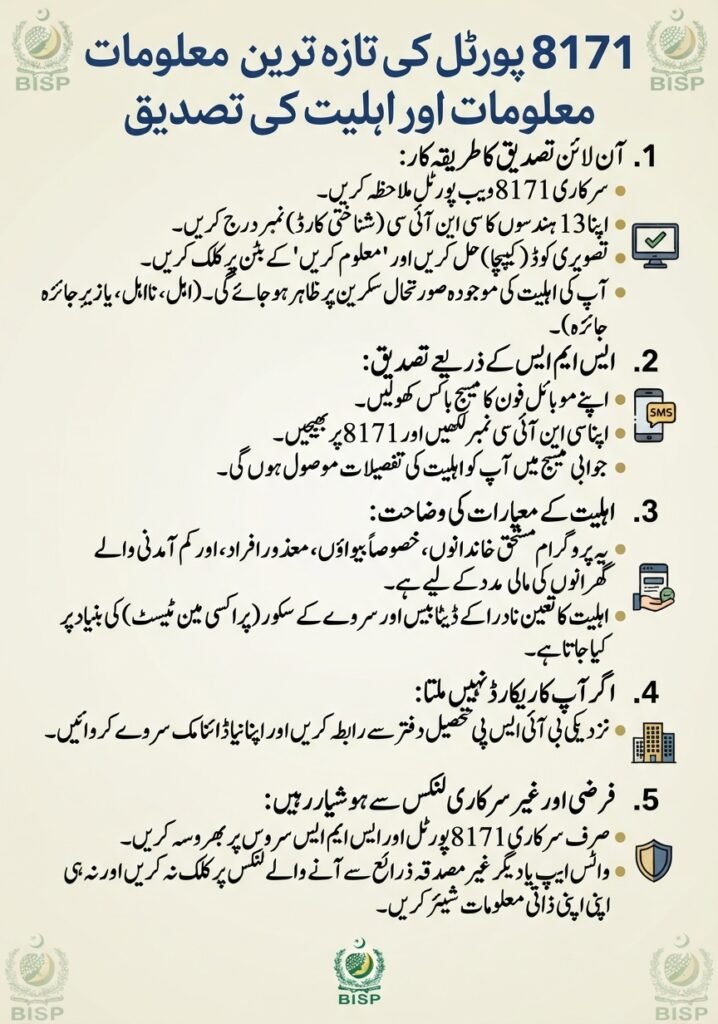
Open your web browser and navigate directly to the official BISP 8171 web portal. You will see a clean interface featuring a designated input box for your CNIC number. Bookmark this page so you do not accidentally click on phishing replicas that mimic government portals.
Entering Your CNIC and Captcha Codes Correctly
Type your 13-digit CNIC number carefully without any spaces or dashes. Next, complete the image verification puzzle or type the security captcha characters displayed on the screen. This step prevents automated bots from overloading the server and keeps the queue moving smoothly for real applicants.
Interpreting Your Verification Results Instantly
Once you hit submit, the system will flash one of three primary responses:
- Eligible and Active: Your funds are ready for collection at designated partner bank ATMs or biometric campsites.
- Under Review: Your data is currently undergoing re-verification through automated scoring mechanisms.
- Ineligible: Your household proxy means test score exceeds the qualifying threshold.
Alternative Verification Methods via SMS
Not everyone has reliable internet access or a smartphone handy. Fortunately, the government maintains a robust SMS gateway that ensures equal accessibility for rural communities.
How to Send Your CNIC via the 8171 Short Code
Open the messaging app on any basic mobile device, type your 13-digit CNIC number in the body, and send it directly to 8171. Make sure your mobile account has a small balance—usually just a few paisas—to ensure the message delivers successfully, as short-code messaging may carry a nominal carrier fee.
What to Do If Your SMS Delivery Fails
If you receive a network error or your message stays in the “sending” state, check your signal strength or restart your device. Network congestion in densely populated districts can occasionally delay replies. If it fails twice, wait thirty minutes before trying again rather than spamming the number.
Understanding Response Timelines and Carrier Charges
An automated reply typically arrives within 1 to 5 minutes. While the BISP service itself does not charge exorbitant fees, your mobile network operator applies standard SMS charges. Keep a record of the reply message on your phone, as field agents occasionally request proof of eligibility text during cash disbursements.
Resolving Common Errors and Survey Discrepancies
Even with an automated system, glitches happen. Knowing how to troubleshoot common verification errors can save you weeks of administrative limbo.
How to Fix the “Record Not Found” Error
Seeing “Record Not Found” usually means your household was never surveyed during the last NSER door-to-door drive. To fix this, visit your nearest BISP Tehsil Office immediately with your original CNIC and registered children’s B-forms to request a fresh dynamic survey entry.
Steps to Take If Your Status Shows Ineligible
An “Ineligible” status is not necessarily permanent. If your financial situation has changed—such as job loss or a medical emergency—you can file an appeal or request a resurvey at your district registration center to update your proxy means test score.
Locating Your Nearest BISP Tehsil Office for Biometric Issues
If your fingerprint verification fails at the ATM or retail agent, the system might flag a biometric mismatch. You will need to visit a designated BISP tehsil office equipped with Nadra-linked scanners to update your thumb impressions and clear the block.
Maximizing Safety and Avoiding Fraudulent Links
With millions of citizens checking portals daily, scammers frequently launch phishing campaigns promising fake cash stipends. Protecting yourself requires constant vigilance.
Spotting Fake WhatsApp Messages and Phishing Websites
If someone forwards a WhatsApp link claiming you have won a special cash package and asks you to share personal details or pay a registration fee, delete it immediately. The government never uses WhatsApp broadcasts or private web domains to distribute welfare funds.
Why You Should Never Share Your PIN or OTP
Your ATM PIN and One-Time Passwords (OTPs) are strictly for your eyes only. BISP representatives, bank officials, and helpline agents will never ask for your PIN over a phone call. Handing this information over compromises your entire stipend balance.
Official Helplines and Verified Communication Channels
Always rely on official channels for grievance redressing. You can reach out through the official BISP toll-free helpline or visit gov.pk domains. When in doubt, walk into a physical BISP tehsil office where authorized personnel can guide you face-to-face without hidden agendas.
Frequently Asked Questions
How can I check my 8171 eligibility online?
Visit the official BISP 8171 web portal, enter your 13-digit CNIC number without dashes, complete the security verification captcha, and click submit to view your live status instantly.
Is there any fee to check status via SMS?
Sending your CNIC to 8171 incurs only standard network operator SMS charges. The BISP program itself does not charge any fee for eligibility verification.
What should I do if my CNIC is not in the database?
If the portal displays a record-not-found error, visit your nearest BISP tehsil office with your original identity card to complete a fresh dynamic survey registration.
Can I collect payments using someone else’s biometric verification?
No, cash disbursements require strict biometric verification matching your NADRA records. You must be present physically with your original CNIC to withdraw funds.
How often are eligibility statuses updated on the portal?
The database updates continuously as new NSER surveys and financial audits are processed. If your status is under review, checking back once every two weeks is recommended.
Who is eligible for the BISP financial assistance?
Eligibility is determined through a proxy means test (PMT) score based on household income, asset ownership, and demographic data collected during official poverty score surveys.