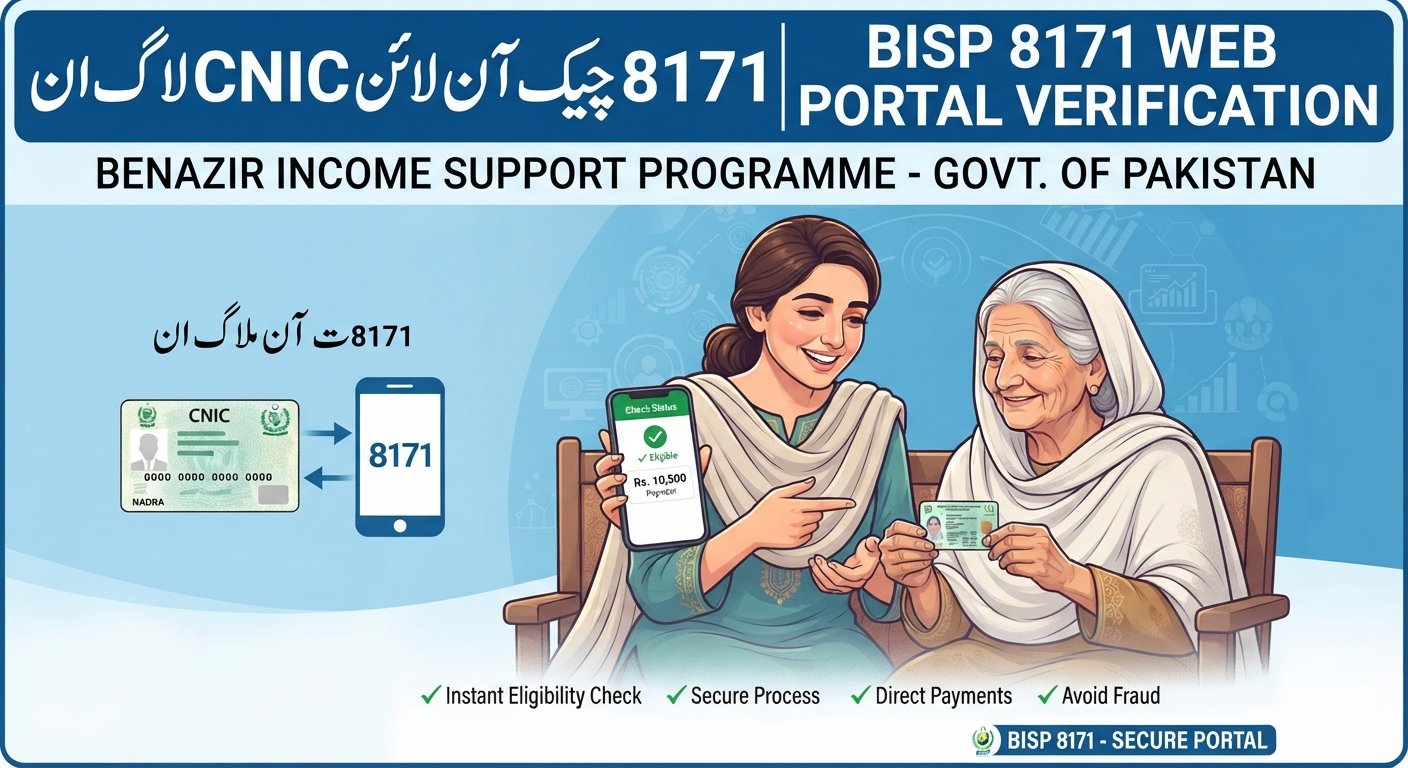
8171 Check Online CNIC Login
Check your BISP status instantly using the 8171 check online CNIC login guide. Learn step-by-step verification, fix errors, and avoid scams. If you have ever stood in a long, exhausting queue under the scorching sun just to find out whether your Benazir Income Support Programme (BISP) payment has arrived, you already know why the digital portal is a lifesaver. Let’s be honest: government portals can sometimes feel like a maze of error codes, slow loading screens, and confusing steps. When you need financial assistance for your household, waiting weeks for a letter or relying on unverified agents is not an option. That is why understanding how to properly use the 8171 check online CNIC login system matters more than ever. In this comprehensive guide, we are going to break down everything from entering your National Identity Card number correctly to troubleshooting common errors, avoiding fraudulent SMS scams, and securing your rightful quarterly installments without paying a single rupee to middlemen.
Understanding the BISP 8171 Initiative
What is the 8171 Web Portal and Why Was It Created?
The 8171 service was built by the Government of Pakistan to eliminate corruption, reduce wait times, and bring absolute transparency to social protection payouts. Instead of manual ledger books and physical verification slips that were prone to human error or manipulation, the system centralizes data into a secure national database.
Think of it as a direct, digital bridge between registered families and the federal welfare administration. When you check your status online or via SMS, you are querying the live National Socio-Economic Registry (NSER) database to verify your poverty score and eligibility standing.
The Shift from Manual Verification to Digital CNIC Tracking
Years ago, verifying welfare eligibility meant visiting local tehsil offices repeatedly. Today, the 8171 portal handles millions of verification requests daily.
This digital transition has saved countless hours for daily-wage workers, mothers, and elderly citizens who can now check their eligibility status from a basic smartphone right from their living room.
Who is Eligible for BISP Financial Assistance?
The program primarily targets low-income families, widowed women, daily wage earners, and disabled individuals who fall below the established poverty scorecard threshold.
Eligibility is not permanent; it depends on periodic NSER dynamic surveys that update household economic metrics, family size, utility consumption, and asset ownership.
Step-by-Step Guide: How to Perform an 8171 Check Online CNIC Login
Preparing Your Information Before You Begin
Before opening your browser, make sure you have your physical Computerized National Identity Card (CNIC) in hand. Even a single typo in your 13-digit number will result in an “incorrect data” or “record not found” response.
Ensure your mobile phone is nearby, preferably the active SIM card registered directly under your own name through NADRA, as communication and verification codes often rely on it.
Navigating the Official 8171 Web Portal
Open your preferred web browser on your phone or desktop and navigate to the official, secure government domain for BISP verification. Avoid clicking on random third-party blogs or unofficial APK download links promising instant cash approvals, as these are often phishing traps designed to steal your personal data.
Entering Your CNIC and Verification Code Correctly
Once the official portal homepage loads, you will see a clean search box asking for your 13-digit CNIC number.
- Type your CNIC without dashes (or with dashes if the specific field format requires them, though most modern portals auto-format or accept raw digits).
- Enter the visual security code (Captcha) exactly as shown in the image box. This step prevents automated bots from spamming the government server.
- Click the submit or search button to load your live profile details.
Alternative Methods to Check Your 8171 Status
The 8171 SMS Service: How to Check via Mobile Text
If your internet connection is unstable or you do not have access to a smartphone, you can use the SMS method.
- Open your phone’s messaging app.
- Type your 13-digit CNIC number without any spaces or dashes.
- Send this message to the official shortcode 8171.
- Within a few minutes, you will receive an automated reply detailing your current program status, eligibility, or instructions to visit a registration desk.
Understanding SMS Response Codes and What They Mean
Knowing how to read the automated text message is critical:
- Eligible for Payment: You can proceed to your nearest authorized biometric retailer or campsite to collect your cash.
- Under Review: Your NSER data has been recorded, but verification is still processing.
- Ineligible: Your household score exceeds the current cutoff limit, or discrepancies exist in your data.
Visiting Local BISP Tehsil Offices for Direct Support
When online portals and text messages fail due to biometric mismatches or blocked CNICs, your best option is to visit the nearest BISP Tehsil Office.
Bring your original CNIC, children’s B-Forms (if applying for educational stipends), and any previous payment slips to resolve database errors in person.
Common Technical Hurdles and How to Fix Them
“Record Not Found” Errors: Why They Happen and Solutions
Seeing “Record Not Found” can cause instant panic, but do not worry. This usually happens because your household hasn’t been surveyed under the NSER yet, or your CNIC renewal is pending with NADRA.
To fix this, visit your local dynamic survey center to update your family tree and complete your poverty assessment interview.
Handling Biometric Verification Failures at Cash Centers
Fingerprint mismatch is the single biggest hurdle women face when withdrawing money from retailer franchises or designated bank ATMs.
Over time, fingerprint ridges wear down due to physical labor or dry skin. If a machine fails to read your thumbprint, request the retailer to use alternative fingers or visit a designated NADRA office to update your biometric profile.
Avoiding Phishing Scams and Fake SMS Links
Scammers frequently send out fraudulent messages from personal mobile numbers claiming you have won cash grants, asking you to click an unknown link or share your PIN code.
Remember: Official government notifications only ever come from the shortcode 8171. Never share your CNIC PIN, bank details, or personal passwords with anyone over a phone call or unverified WhatsApp link.
Maximizing Your Benefits: Understanding Related Welfare Programs
Taleemi Wazaif: Educational Stipends for Children
If you are already receiving the main BISP quarterly stipend, you are likely eligible for the Taleemi Wazaif educational conditional cash transfer program.
By registering your school-going children (primary, secondary, and higher secondary levels) and ensuring a minimum 70% monthly attendance, you receive bonus cash incentives deposited directly into your account.
Kafaalat and Emergency Relief Packages
The BISP Kafaalat initiative forms the backbone of regular financial support, while specialized emergency relief packages roll out during natural calamities, inflation spikes, or economic shocks.
Keeping your CNIC active and your status verified ensures you never miss out on seasonal subsidies or utility relief grants.
Conclusion
Navigating the social welfare system does not have to be an uphill battle. By using the official 8171 web portal correctly, keeping your physical documentation updated with NADRA, and staying alert against fraudulent text messages, you can secure your financial assistance safely and efficiently.
Take a few minutes today to run your status check online, verify your details, and ensure your household is fully registered to receive every rightful benefit without unnecessary delays.
Frequently Asked Questions (FAQs)
1. Is there any fee to check my 8171 status online or via SMS?
No. Checking your status through the official web portal is completely free of charge. The SMS service sent to shortcode 8171 incurs a standard nominal operator fee (usually around one Rupee plus tax), but no registration or processing fee is ever required.
2. Why does the portal say my CNIC is ineligible when my neighbor is getting payments?
Eligibility is determined strictly by your household’s Proxy Means Test (PMT) score calculated during the NSER survey. Factors like vehicle ownership, foreign travel history, utility bill averages, and land holdings dictate your score against the government’s poverty cutoff line.
3. What should I do if my thumbprint does not match at the payment retailer?
If biometric verification fails repeatedly, your fingerprints may be faded or worn. Visit your local NADRA office to refresh your biometric record, or ask the BISP tehsil office officer to direct you to an alternate bank branch equipped with advanced scanners.
4. Can I check multiple family members’ CNICs using a single search?
No. For data privacy and security reasons, the 8171 system only processes one individual CNIC query at a time. You must enter each adult family member’s identity card number separately to check their individual status.
5. How often are BISP quarterly payments released?
Payments are disbursed on a quarterly basis (every three months). However, exact disbursement dates can vary depending on federal budget allocations and scheduled batch processing phases managed by partner banks like Habib Bank Limited (HBL) or Bank Alfalah.
6. What is the difference between the 8171 web portal and dynamic surveys?
The 8171 portal is merely a viewing tool to check your existing status in the database. A dynamic survey, conducted at local BISP registration offices, is where your actual household socio-economic data is recorded, updated, or re-evaluated.