
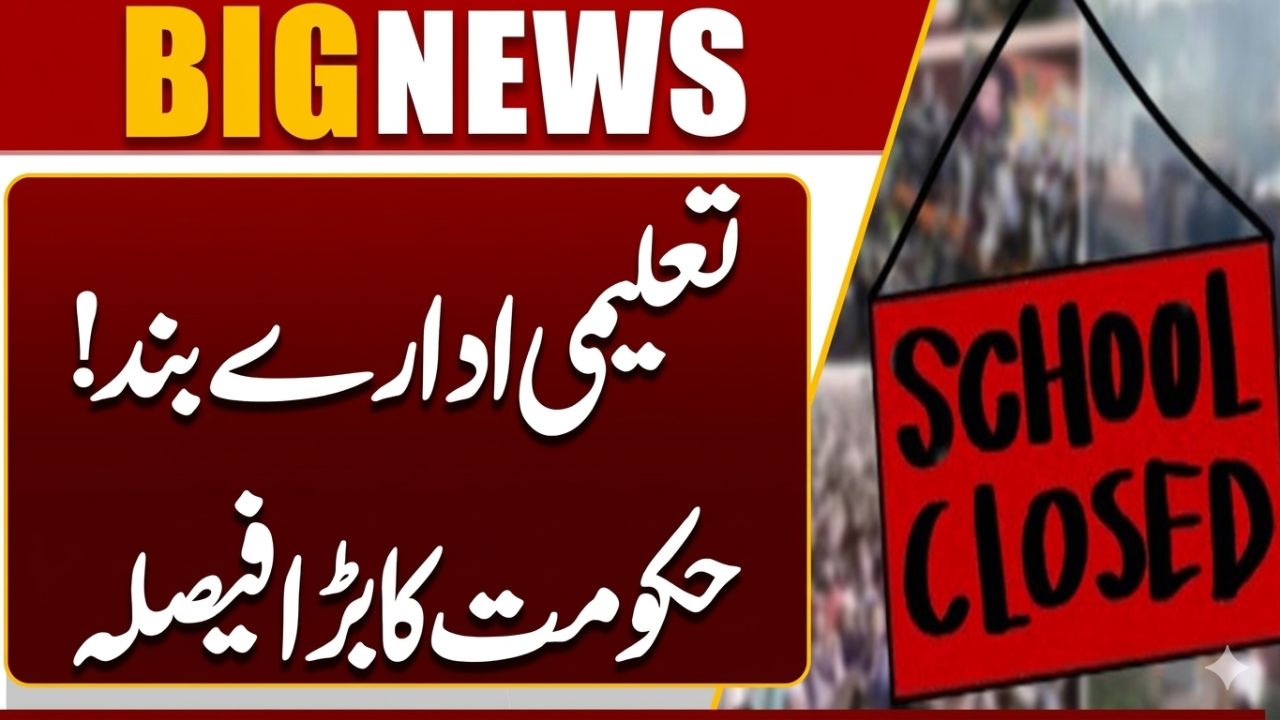
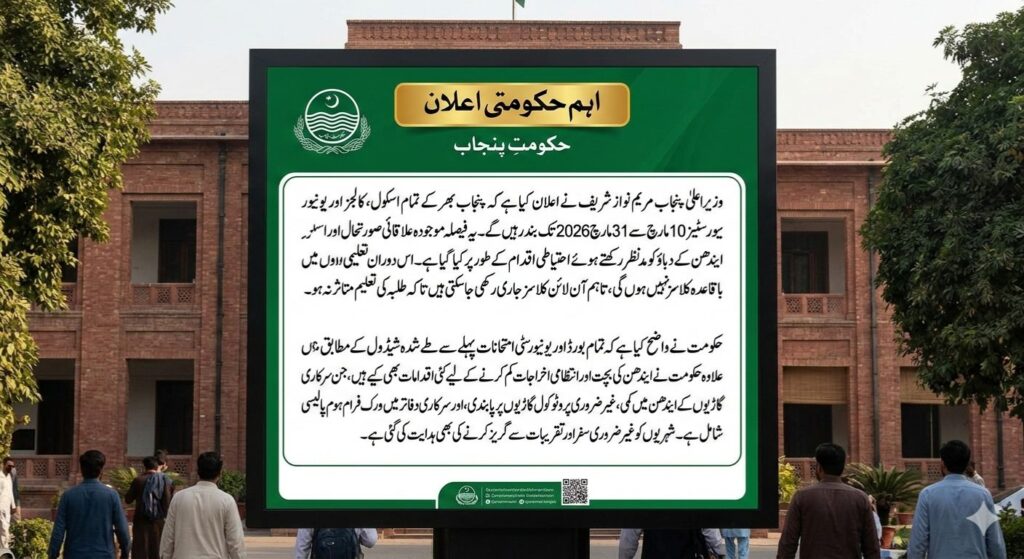
The Punjab government has announced a major decision affecting millions of students across the province. CM Punjab Orders Closure of Schools, Colleges & Universities Till 31 March 2026, following emergency measures introduced by Chief Minister Maryam Nawaz Sharif. The decision was taken due to the ongoing regional tensions in the Middle East and economic pressures related to fuel adjustments. Authorities say the move is aimed at protecting students, teachers, and educational staff while maintaining educational continuity through online learning systems where possible.
You Can Also Read: CM Punjab Rehmat Card Apply Online 2026
| Key Information | Details |
| Announcement Date | 9 March 2026 |
| Authority | Government of Punjab |
| Ordered By | Chief Minister Maryam Nawaz Sharif |
| Closure Start Date | 10 March 2026 |
| Closure End Date | 31 March 2026 |
| Institutions Affected | Schools, Colleges, Universities |
| Exams Status | Exams will continue as scheduled |
| Online Classes | Allowed during closure |
Why CM Punjab Ordered Closure of Schools, Colleges & Universities
The decision regarding CM Punjab Orders Closure of Schools, Colleges & Universities has been taken as part of emergency administrative measures. The provincial government stated that the current international situation and fuel supply concerns require temporary preventive actions.
These closures are not related to health issues but are mainly precautionary steps due to economic pressure and regional conflict concerns. Officials believe reducing transport and institutional operations can help manage fuel consumption and maintain stability.
Punjab authorities also emphasized that this measure is temporary and will remain in effect only until 31 March 2026, unless new developments require further extension.
Punjab Educational Institutions Holiday Announcement – 9 March 2026
The announcement made on 9 March 2026 confirms that all educational institutions across Punjab will remain closed for around three weeks.
- Schools, colleges, and universities will close from 10 March 2026.
- The closure will remain effective until 31 March 2026.
- Both public and private institutions are included in this decision.
- Educational institutions may continue academic activities through online platforms.
- Students scheduled for board or university exams must appear according to the original schedule.
This step ensures that the academic calendar does not face serious disruption despite the temporary closure.
Educational Activities During the Closure Period
- Academic Continuity During Holidays
Even though campuses will remain closed, education will continue in different ways.
- Institutions may organize online classes using virtual platforms.
- Teachers can share assignments and study materials digitally.
- Students are encouraged to stay active in their learning routines.
- Schools and universities will provide updates through official websites or social media.
This hybrid approach helps ensure that students do not fall behind in their studies while campuses remain closed.
Additional Emergency Measures Announced by the Punjab Government
- Government Administrative Measures
Along with educational closures, several administrative steps have been announced to manage the situation.
- Official fuel for provincial ministers has been suspended.
- 50% reduction in fuel allowance for government vehicles.
- Extra protocol vehicles banned, only one security vehicle allowed.
- Work from home policy introduced in government offices.
- Only essential staff will attend offices.
These measures aim to reduce fuel consumption and improve administrative efficiency during the emergency period.
Public Safety and Social Activity Restrictions
- Guidelines for Citizens
The government has also issued several public guidelines to maintain safety and economic stability.
- Citizens should avoid unnecessary travel and shopping.
- Late-night outings are discouraged during this period.
- Outdoor events and government programs have been suspended.
- The famous Horse and Cattle Show has been postponed.
- District authorities will monitor local conditions carefully.
These instructions are meant to ensure public safety while minimizing unnecessary activities during the temporary emergency period.
Fuel Monitoring and Economic Control Measures
- Fuel Supply Monitoring Plan
To maintain stable fuel supply across Punjab, the government will establish monitoring mechanisms.
- District petroleum monitoring committees will be created.
- Officials will oversee fuel distribution and availability.
- Steps will be taken to prevent artificial shortages.
- Authorities will also monitor price fluctuations and supply chains.
These actions are designed to prevent panic buying and ensure smooth fuel distribution across the province.
Conclusion
The announcement that CM Punjab Orders Closure of Schools, Colleges & Universities Till 31 March 2026 is a precautionary administrative decision taken to address regional tensions and economic pressures related to fuel management. While campuses will remain closed temporarily, educational activities will continue through online learning and examinations will proceed according to the original schedule.
Students and parents should stay connected with their institutions for further instructions. If the situation improves earlier, the Punjab government may revise the closure decision and announce updated guidelines.
Frequently Asked Questions (FAQs)
Are all schools and universities closed in Punjab until 31 March 2026?
Yes, the Punjab government has ordered the closure of all schools, colleges, and universities from 10 March to 31 March 2026.
Will board and university exams be postponed?
No. According to the government announcement, all examinations will be held according to the existing schedule.
Can students attend online classes during this period?
Yes. Educational institutions are allowed to arrange online classes and virtual learning sessions during the closure.
Where can students check official updates?
Students can check updates on the Punjab government website, education department portals, or through their respective institutions.
.