
Benazir Income Support Programme
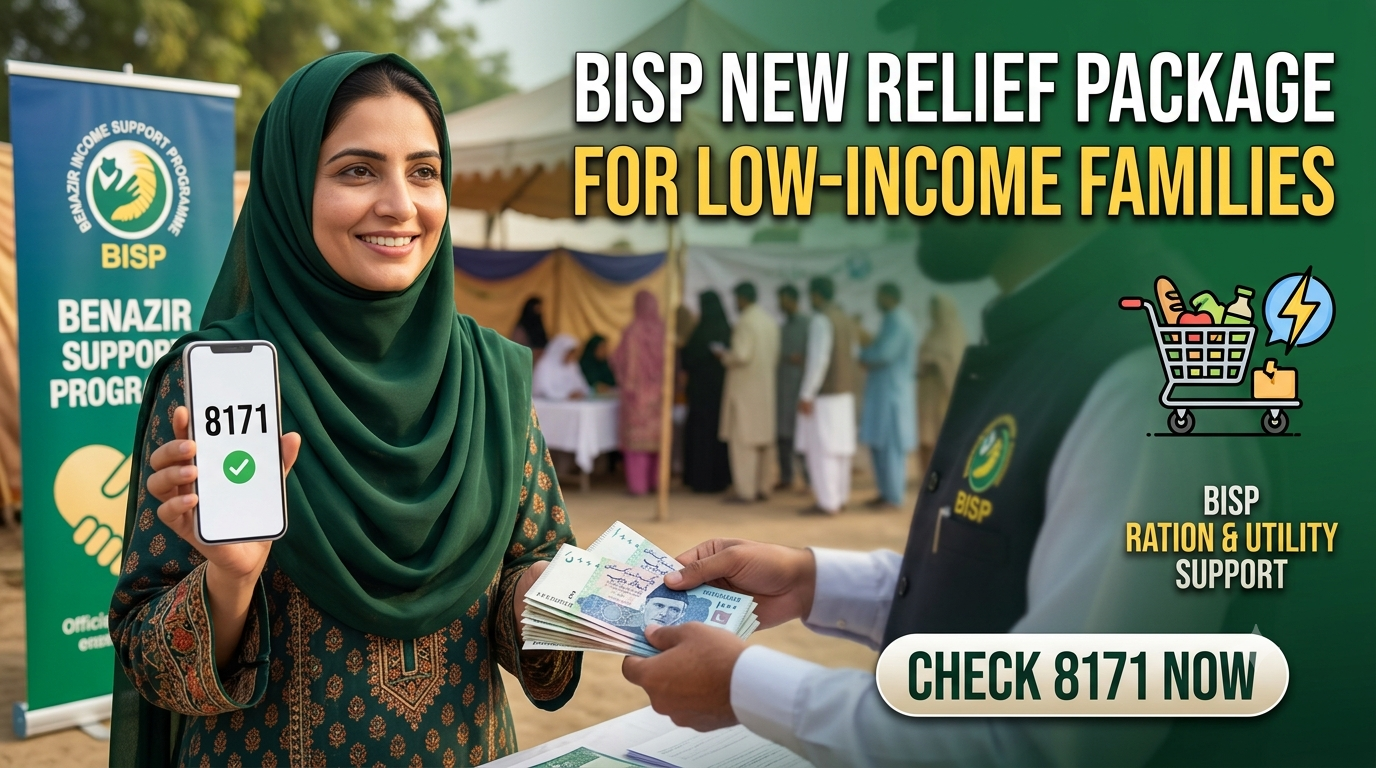
Get the latest updates on the Benazir Income Support Programme New Relief Package. Learn about the 8171 online check, PMT scores, and how to register. Inflation is squeezing the budgets of poor households across Pakistan, making basic groceries feel like luxury items. To fight this economic pressure, the government has rolled out a brand-new Benazir Income Support Programme (BISP) relief package specifically designed to shield low-income families from skyrocketing utility and food costs. If your household budget is stretched to the breaking point, this updated initiative could provide the critical financial breathing room you need right now. Let’s break down exactly what this new relief package offers, who qualifies, and how you can claim your support without getting lost in government red tape.
Also read: Apna Ghar Apni Chat Scheme Punjab 2026: Online Registration & Eligibility
Understanding the New BISP Relief Package
The structural framework of Pakistan’s social safety net is undergoing a massive shift. This new relief package isn’t just a minor top-up to the usual quarterly disbursements; it is a targeted economic cushion designed to counter recent subsidy cuts at utility stores and general market inflation.
The primary objective here is direct, unconditional cash transfers combined with conditional subsidies. By pumping liquidity straight into the hands of women headers of households, the programme ensures that emergency funds are spent where they matter most: food, healthcare, and education.
What Makes This Updated Relief Scheme Different?
Previously, social welfare programs operated in silos. A family receiving cash through BISP often had to navigate entirely separate provincial channels to get discounted flour or electricity subsidies.
This updated package consolidates multiple benefits. When you are registered under the new phase, your dynamic profile automatically syncs with utility store networks and provincial relief dashboards, reducing the need for multiple registrations.
The Role of the National Socio-Economic Registry (NSER)
At the heart of this expansion lies the NSER database. Instead of relying on static, years-old data, the government is utilizing real-time socioeconomic mapping.
If a family’s primary breadwinner loses their job or faces a sudden medical emergency, the updated NSER data capture allows for rapid adjustments in their poverty score ranking. This ensures that aid reaches vulnerable people when they are actually vulnerable, rather than months after the crisis has passed.
Eligibility Criteria and the PMT Score Breakdown
Securing financial aid requires passing a strict, data-driven screening process. The government determines who gets a slice of this relief package based on your household’s specific economic footprint.
The core metric used for this assessment is the Proxy Means Test (PMT) score. Think of your PMT score as an inverted financial health rating—the lower your score, the higher your need for external financial support.
Poverty Score (PMT Range) Below 32 means you are Fully Eligible for Core Cash Stipends.
Poverty Score (PMT Range) between 32 to 40 means you are Eligible for Conditional Food and Education Subsidies.
Poverty Score (PMT Range) Above 40 means you are Non-Eligible and deemed self-sufficient.
What Is the PMT Score Cutoff for the New Relief Package?
For the regular Kafaalat monthly cash transfers under this new package, the standard PMT score cutoff remains firmly at 32. However, recognizing that the lower-middle class is also slipping under the poverty line due to inflation, certain conditional relief components—like the special kitchen ration subsidies—have stretched the eligibility threshold to a PMT score of 40.
How Does the Government Calculate Your Poverty Score?
The NSER data collection teams do not just look at your cash savings. They evaluate a complex matrix of household variables, including asset ownership, utility bills, and household demographics.
Asset Ownership: Do you own agricultural land, a tractor, or a commercial property? Even owning a registered motorcycle can shift your score.
Utility Bills: Your historical electricity and gas consumption patterns are heavily weighted. Consistently high power bills suggest a lifestyle above the lowest poverty tier.
Household Demographics: The ratio of earning members to dependents (children, elderly, or disabled individuals) plays a massive role in tilting the final calculation.
Who Is Automatically Excluded from BISP Relief?
The system uses automated data filters to weed out ineligible applicants instantly. Your application will be flagged and rejected if any member of your immediate family household holds a valid Pakistani passport, owns a registered four-wheeled vehicle, is a current or retired government employee, or possesses a microfinance bank account with high-volume monthly turnover.
Step-by-Step Registration Guide for New Families
Missing out on cash assistance simply because you filled out a form incorrectly is incredibly frustrating. The registration process has been streamlined, but it still requires strict adherence to specific bureaucratic steps.
You can complete the onboarding process without paying any agent or third-party middleman by following this verified verification path: First, check your status via the 8171 web portal. Next, visit the nearest BISP registration center. Then, complete your NSER interview and biometric verification. Finally, wait for the SMS notification from 8171 to collect your funds from a designated bank or campsite.
Step 1: Checking Your Initial Status via 8171 Portal
Before waking up early to stand in long queues at a physical office, check your current status digitally from your phone.
Open the Official Portal: Navigate to the official 8171 web portal using a secure mobile browser.
Enter Your Credentials: Carefully type in your 13-digit Computerized National Identity Card (CNIC) number without any dashes.
Submit the Captcha Code: Enter the verification code displayed on the screen and hit submit. The system will instantly display whether your household is currently registered, needs a survey update, or is ineligible.
Step 2: Visiting the Nearest BISP Registration Center
If the portal indicates that you need an updated survey, your next step is a physical visit to a designated tehsil registration office.
Bring the Correct Documentation: You must bring the original CNIC of the female head of the family, along with the automated Child Registration Certificates (B-Forms) issued by NADRA for all your children.
Complete the NSER Interview: A data entry operator will interview you regarding your living conditions, income sources, and asset ownership. Answer honestly, as this data is cross-verified with central databases.
Provide Biometric Fingerprints: The process concludes with live thumbprint scanning. Ensure your fingerprints are clearly captured, as mismatched biometrics are the leading cause of delayed payouts later on.
Step 3: What to Do If Your Biometric Verification Fails
Biometric failure is a widespread issue, particularly for manual laborers or elderly citizens whose fingerprints have faded over time. If the cash point device rejects your thumbprint, do not panic.
You need to obtain a verification failure slip from the cash agent and visit your local NADRA office for a temporary biometric bypass or fingerprint update. Once NADRA updates your profile, BISP will issue your stipend through a designated bank branch counter via manual verification.
BISP Sub-Programs: Maximizing Your Family’s Benefits
The Benazir Income Support Programme is an umbrella network. Many eligible families make the mistake of collecting their basic cash stipend while completely missing out on thousands of rupees available through specialized sub-programs.
To extract the maximum possible financial relief for your household, you should ensure you are enrolled in every branch of the initiative—including BISP Kafaalat core cash, Taleemi Wazaif child stipends, and the Nashonuma maternal health program—that fits your family structure.
Benazir Kafaalat: The Core Financial Base
This is the foundational cash transfer program that provides the predictable base income for registered women. Under the new relief package, this unconditional cash transfer has been bumped up to help absorb the shock of inflation. It serves as the primary defense mechanism against food insecurity for millions of homes.
Benazir Taleemi Wazaif: Cash Incentives for Education
Do not let your children drop out of school due to a lack of uniform or book funds. The Taleemi Wazaif initiative pays out conditional cash stipends every three months to families who maintain a minimum 70% school attendance record for their children.
Why Does the Program Offer Higher Payout Rates for Girls?
The program deliberately structures higher payout rates for female students to encourage girls’ education in rural areas. Primary school girls receive a higher base rate compared to boys, with the amount scaling significantly as they progress into middle and secondary education.
Benazir Nashonuma: Fighting Stunting in Infants
The first 1,000 days of a child’s life dictate their lifelong cognitive and physical potential. The Nashonuma program targets pregnant women, lactating mothers, and infants under two years of age.
Beneficiaries receive specialized, nutrient-rich food packets alongside a monthly cash stipend to offset travel costs to healthcare facilities. To claim this, you must visit a dedicated Nashonuma kiosk located inside your district’s main government hospital.
Secure Payout Methods and Avoiding Scams
With large sums of public money flowing through digital channels, opportunistic scammers always emerge. Protecting your hard-earned relief cash requires vigilance and a clear understanding of how official payments actually work.
Official disbursements are channeled strictly through authorized partner commercial banks—such as Bank Alfalah in specified regions and Habib Bank Limited (HBL) in others—using biometric ATMs and verified retail campsites.
How to Safely Collect Your Relief Funds
When an 8171 SMS confirms that your cash has been released, head to an authorized partner bank biometric ATM or an official BISP distribution campsite.
Never hand your CNIC over to a mobile agent who operates out of sight. Demand to see the digital screen during your fingerprint scan, and ensure you receive a printed receipt showing the exact amount deducted from your digital wallet.
How Can I Recognize and Report Fake 8171 Messages?
This is a critical safety rule: BISP will only ever text you from the shortcode number 8171. If you receive a message from a normal 11-digit mobile number claiming you won a lottery, it is a scam.
If you receive a WhatsApp message, a phone call from a private mobile number, or an SMS from a standard mobile number claiming that you have won a BISP lottery or that your account is blocked, it is a scam. Never send mobile load, easy-paisa transfers, or your personal citizen data to these criminals. If you are targeted, file an immediate complaint with the Federal Investigation Agency (FIA) Cybercrime wing or call the official toll-free BISP helpline.
Actionable Next Steps for Low-Income Families
Navigating government aid can feel overwhelming, but securing this relief package comes down to taking clear, immediate actions. Do not leave money on the table that your family genuinely needs to cope with current economic realities.
First, check your registration status today by sending your CNIC number to 8171 or checking the web portal. If you are already registered, check your local campsite schedule to collect your upgraded stipend. If you aren’t registered yet or your survey data is more than three years old, gather your NADRA family documents and head to your local tehsil office for a fresh NSER evaluation. Taking these steps now ensures your household is shielded by the latest social safety nets Pakistan has to offer.
Frequently Asked Questions
How can I apply for the new BISP relief package online?
There is no purely online application form for BISP registration. You can check your eligibility status online via the official 8171 portal, but to complete the registration, you must physically visit a BISP registration center for an NSER survey and biometric verification.
What should I do if my BISP card or account is blocked?
If your assistance has stopped, visit your local BISP office with your original CNIC. Accounts are usually blocked due to outdated survey data, a change in family structure, or an automated NSER system flag indicating your household income has risen above the cutoff threshold.
Can a family receive both BISP and provincial relief subsidies?
Yes. The new relief package framework allows for cross-platform integration. Eligible families can receive their core monthly cash transfers from BISP while simultaneously benefiting from provincial initiatives like sasta ration programs or solar panel subsidies.
Is there any fee for the NSER registration survey?
The NSER survey and the entire BISP registration process are completely free of charge. If any agent, official, or shopkeeper demands a fee or cuts a percentage from your cash disbursement, report them immediately to the official helpline.
How long does it take to get cash after completing the survey?
After your NSER survey is submitted, the backend verification matrix takes roughly 3 to 6 months to analyze your data, calculate your final PMT score, and clear your name for disbursements if you fall below the poverty threshold.